



AI for Employer Branding: How AI Search Is Changing Career Site Storytelling
The way candidates research employers is changing quickly — and it’s creating new challenges and opportunities for AI for employer branding.
For years, employer brand strategies revolved around search engines, job boards, and career sites. Candidates would discover a company, visit its careers page, explore employee stories and benefits, and decide whether to apply.
But increasingly, candidates are starting somewhere else: AI.
Instead of searching directly for jobs or company websites, candidates are asking tools like ChatGPT, Gemini, and Perplexity broader, exploratory questions:
- What are the best pharma companies to work for?
- Which companies have the strongest engineering culture?
- What companies are actually good for working parents?
- Does [Company] have good work-life balance?
- What’s it like to work at [Company]?
The answers they receive are rarely pulled from a single source. Large language models (LLMs) synthesize information from across the internet — Reddit threads, Glassdoor reviews, employee LinkedIn posts, media coverage, company websites, and other publicly available content.
For employer brand leaders, this marks a significant shift. AI for employer branding is no longer just about experimenting with new tools or generating content faster. It’s about understanding how AI evaluates employer brands, what information candidates see first, and how your organization can create the authentic, human-centered stories that both candidates and AI systems trust.
How AI is Evaluating Your Employer Brand
As you optimize your career site, it’s important to remember that AI models prioritize human-centric content.
That’s why sites like Reddit, Glassdoor, and LinkedIn appear so frequently in AI-generated answers about workplace culture and employee experience. These platforms contain the kind of information LLMs synthesize best: firsthand experiences, specific examples, recurring themes, and authentic language rather than generic corporate messaging.
Consistency matters too. If your career site says your organization supports flexible work, but Glassdoor reviews consistently describe a rigid in-office culture, AI systems can recognize those inconsistencies. Candidates can, too.
Increasingly, an employer brand is no longer defined solely by what a company says about itself. It’s shaped by the collective narrative that exists across the internet. That means your employer brand in the age of AI is becoming less about one polished campaign and more about creating clear, consistent signals across multiple channels.
AI for Employer Branding Starts With Your Career Site
This shift doesn’t make career sites less important. It changes their role.
Historically, career sites were discovery tools. Today, candidates often arrive after AI tools, reviews, and third-party content have already shaped their perception of your company.
That shifts the role of the career site from attracting attention to validating decisions. The most effective career sites function less like digital brochures and more like knowledge hubs that answer those questions clearly.
- What is the engineering culture actually like?
- What tech stack will I be using?
- What does “hybrid schedule” really mean?
- What does career growth look like here?
- How do managers support development?
- What does day-to-day work feel like on this team?
Generic messaging isn’t enough. Candidates want proof and specificity.
That means investing in richer content experiences like team-specific landing pages, employee Q&As and testimonials, career growth stories, day-in-the-life content, and clear explanations around hybrid work policies and benefits. Watch this video from The Knot Worldwide, which shows a day in the life of a hybrid sales manager in their Spain office.
The goal is no longer just attracting candidates — it’s helping the right candidates determine whether your company is the right fit.
How to Make Your Employer Brand More Visible to AI
Career sites now need to work for both human candidates and AI crawlers.
LLMs rely heavily on structure and surrounding text to understand content. That means the technical setup of your career site matters more than ever. FAQ widgets, Q&A pages, clear headers, structured tagging, and organized landing pages all make it easier for LLMs to crawl and synthesize your content.
Video optimization matters too.
Video is one of the strongest storytelling formats in employer brand, but most AI systems understand videos primarily through the text surrounding them.
Every embedded video should include:
- A clear title
- A detailed description
- Closed captions
- A transcript
- Relevant metadata and alt text
Without that supporting text, valuable employee stories become significantly harder for AI systems to understand and surface.
Consistency matters too. Using clear, repeatable language around culture, growth, leadership, and flexibility helps AI systems better understand your employer brand over time.
Creating Consistent Employer Brand Signals Across the Web
Reviews, social media, and employee advocacy have influenced employer perception for years. What’s changing is that AI now synthesizes all of that information together, making it much easier for candidates to quickly form opinions about what it’s actually like to work at your company.
That’s why internal employer brand activation is becoming increasingly important.
Employees need clear language to describe their experiences consistently. If your EVP centers around themes like purpose, career growth, access to leadership, flexibility, or innovation, those ideas should be reinforced internally.
Because when employees naturally describe similar experiences across the web, AI systems interpret those repeated themes as stronger signals.
This is where initiatives like:
- Employee advocacy programs
- Glassdoor review campaigns
- Internal storytelling initiatives
- EVP activations
- Culture communications
…all begin to compound.
The goal isn’t to script employees or manufacture messaging. It’s to create a cohesive and authentic understanding of what it’s actually like to work at your company — one that employees themselves reinforce across the internet.
How Stories Inc. Helps Brands Succeed in the Age of AI Search
As employer brands adapt to AI search, the challenge isn’t just creating more content — it’s creating authentic, scalable storytelling that works across career sites, social channels, employee advocacy, and the broader web.
That’s exactly what Stories Inc. is built to support.
Human-Centric: We uncover real employee experiences, specific career journeys, and tangible examples of culture in action — the kind of authentic storytelling both candidates and AI systems trust most.
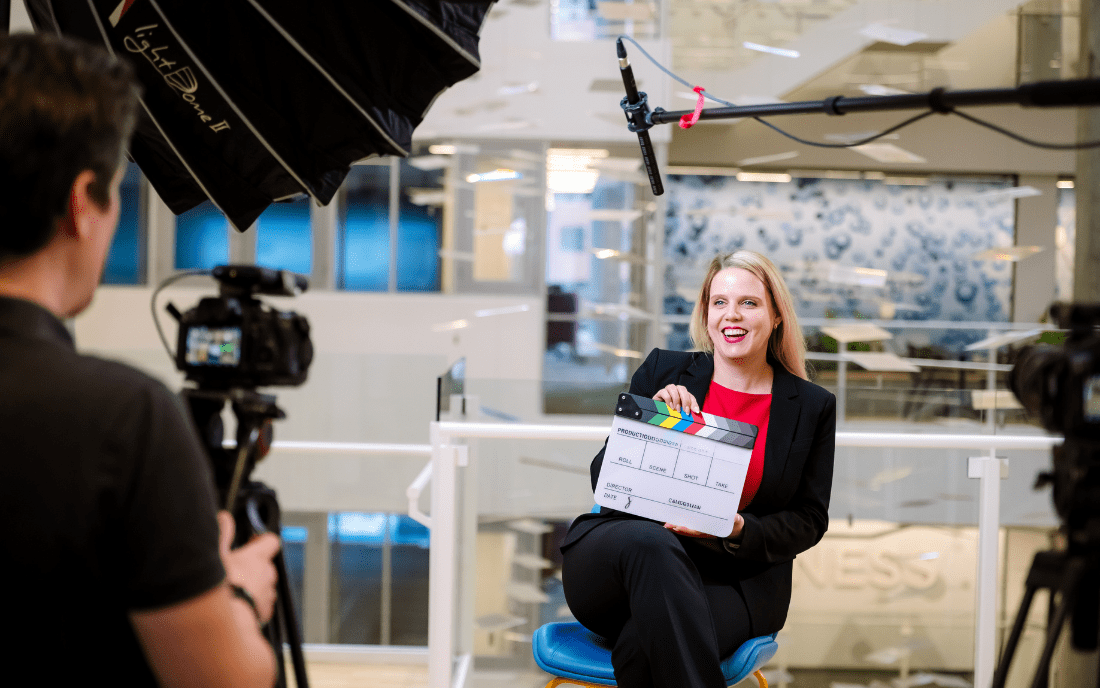
Built for Scale: We capture extensive footage and interview content during filming days, fueling the team pages, location spotlights, realistic job previews, employee FAQ content, career blogs, social campaigns, and more that modern career sites need.
Consistent: Our clients work with a dedicated point of contact who understands their culture deeply, helping stories feel cohesive across teams, regions, and channels. This creates the clear employer brand signals candidates and LLMs increasingly rely on.
Storytelling Programs: Our content extends far beyond the career site. Clients use Stories Inc. content to activate EVPs internally, power employee advocacy programs, support culture communications, and create authentic storytelling campaigns across the organization.
The Future of AI for Employer Branding
AI search isn’t eliminating the need for employer brand storytelling — it’s raising the standard for it. Candidates are still looking for authenticity, clarity, and evidence that a company’s culture matches its messaging. The difference is that they’re now forming those impressions long before they arrive on your career site.
The organizations that will stand out in the age of AI won’t necessarily be the loudest or most polished. They’ll be the ones creating consistent, human-centered stories across their career site, employee voices, reviews, and online presence.
Because increasingly, employer brand is no longer just what your company says about itself — it’s the story AI can confidently piece together from everything the internet says about you.